
By Rini Elizabeth Babu | Founder & Lead Designer, Turtle Vine Interiors
Updated on: 11-12-2025 · 7 min read
Table of Contents
Why Modular Kitchen Planning Often Goes Wrong (Common Modular Kitchen Mistakes)
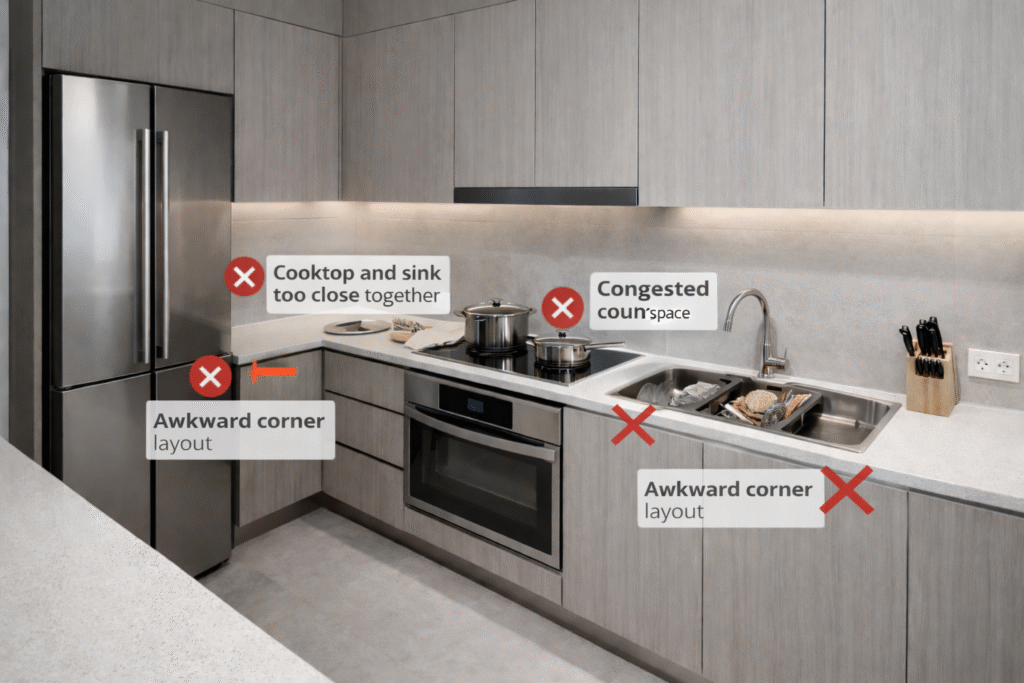
Common modular kitchen layout mistakes that reduce workflow efficiency and everyday comfort
A modular kitchen is one of the most used spaces in any home — and also one of the most expensive to redo if something goes wrong. Most homeowners focus on how the kitchen looks (colours, handles, tiles), which often leads to common modular kitchen mistakes during planning.
If you’re planning a new modular kitchen or a full home renovation, explore our interior design services in Kerala for expert planning, durable material selection, and end-to-end execution
After completing more than 120+ interior projects across Kerala, we’ve noticed that the same mistakes repeat again and again.
The good news?
Every one of these mistakes is completely avoidable with the right planning approach.
In this blog, I’ll walk you through the 10 most common modular kitchen mistakes homeowners make — and exactly how to avoid them so your kitchen stays beautiful, durable, and easy to use for years.
Key Modular Kitchen Planning Takeaways
- A modular kitchen must be planned around workflow, not just aesthetics.
- Materials like marine ply are worth the investment for long-term durability.
- Countertop height, lighting, and ventilation directly affect everyday comfort.
- Accessories alone won’t make a kitchen functional — layout matters more.
Mistake #1: Choosing the Wrong Material for the Kitchen
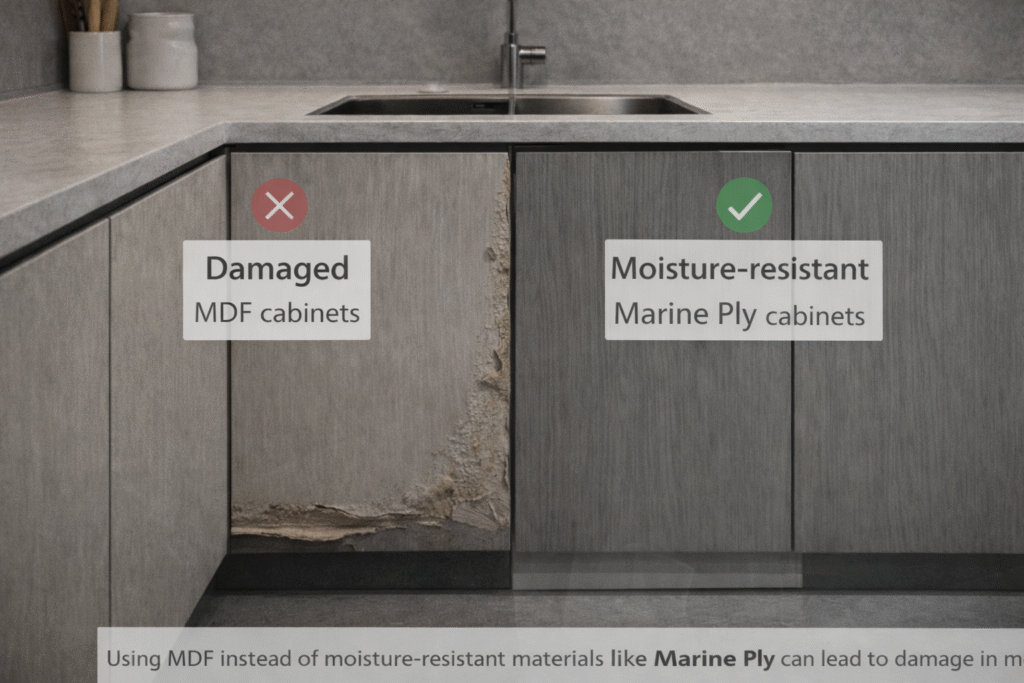
Wrong material selection is one of the most common modular kitchen mistakes — MDF swells in moisture, while marine ply offers long-term durability
The Mistake
Selecting MDF or low-quality plywood in moisture-heavy areas like under the sink or near the hob.
Why It’s a Problem
Kitchens face heat, steam, spills, and moisture daily. Poor materials warp, bubble, or delaminate quickly, leading to early failure.
This is why professional modular kitchen design services focus on material selection, moisture resistance, and long-term durability — not just finishes.
How to Avoid It
- Use 16mm Marine Ply (IS:710) with 0.7mm liner mica for the carcass
- Use 1mm mica for shutters
- Avoid MDF completely in wet zones
Designer Tip from Rini:
Always check for IS:710 certification. Many “marine-like” materials sold in the market have no real durability guarantee.
Mistake #2: Ignoring the Kitchen Work Triangle
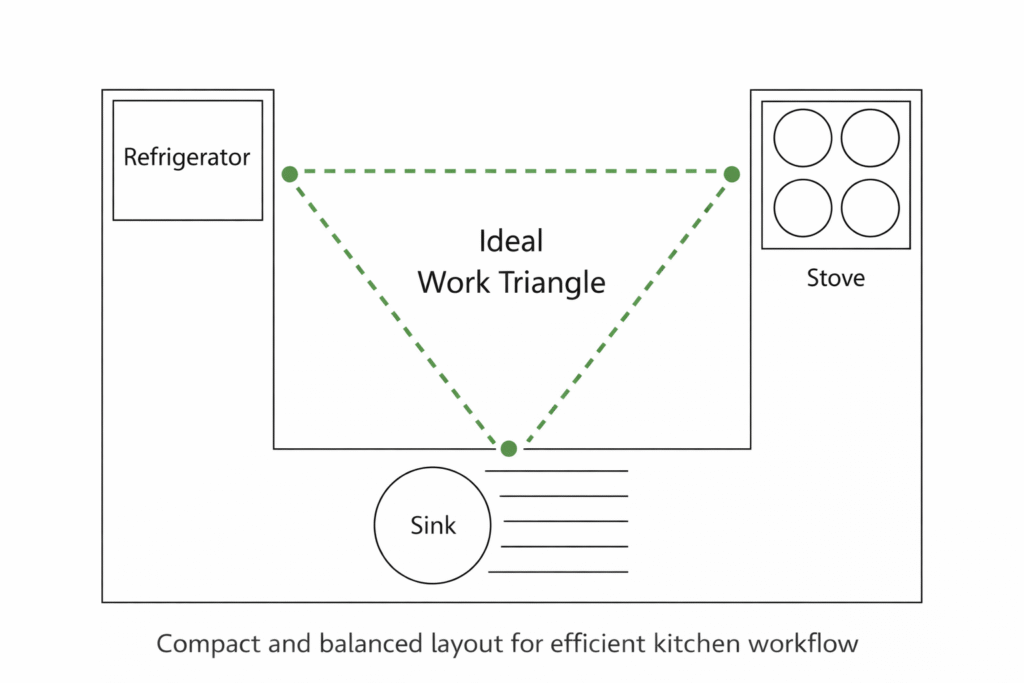
An ideal kitchen work triangle ensures smooth movement between the sink, stove, and refrigerator for efficient daily cooking
The Mistake
Placing the hob, sink, and refrigerator too far apart — or too close.
Why It’s a Problem
Poor placement makes daily cooking tiring and inefficient.
How to Avoid It
Follow the work triangle rule:
- Hob ↔ Sink: 4–6 ft
- Sink ↔ Fridge: 4–7 ft
- Hob ↔ Fridge: 4–7 ft
This ensures smooth workflow and comfort.
Mistake #3: Poor Ventilation Planning
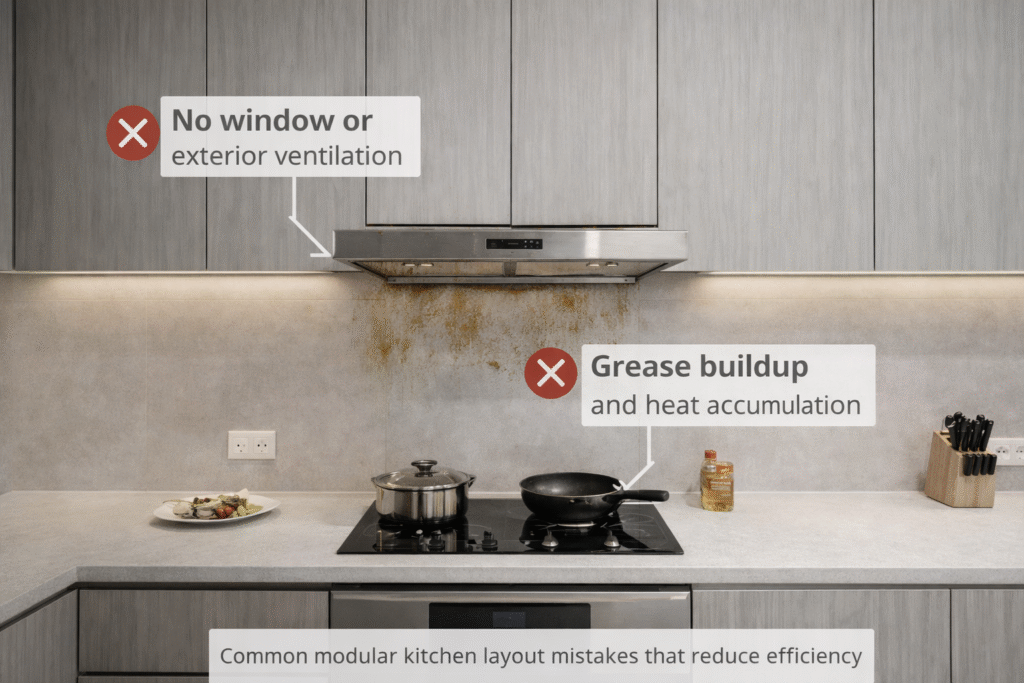
Common modular kitchen layout mistakes that affect workflow, comfort, and daily usability
The Mistake
Relying only on a chimney without proper cross-ventilation.
Why It’s a Problem
Smoke and oil circulate, leading to sticky cabinets and poor indoor air quality.
How to Avoid It
- Use a 900–1200 m³/hr suction chimney
- Ensure at least one openable window
- Avoid placing the hob directly under a beam
Mistake #4: Incorrect Countertop Height

Incorrect vs correct countertop height: the right height aligns with elbow level to avoid back and shoulder strain during daily cooking.
The Mistake
Using a standard height for everyone.
Why It’s a Problem
Incorrect height causes back, shoulder, and elbow strain.
How to Avoid It
Ideal height = Your elbow height – 3 inches
Most Indian kitchens work best between 34–36 inches.
Mistake #5: Using Too Many Open Shelves
The Mistake
Open shelves everywhere because they look stylish.
Why It’s a Problem
They collect grease and dust quickly.
How to Avoid It
- Use open shelves only for décor
- Choose closed storage for daily use
Mistake #6: Overlooking Task Lighting
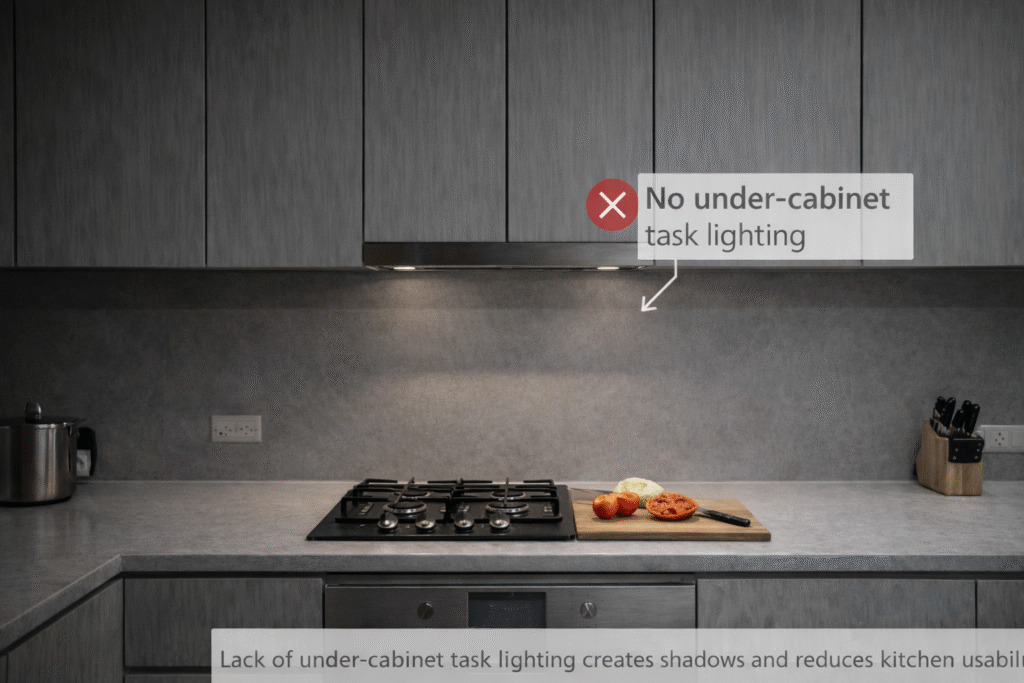
Chimney lights alone are not enough—lack of under-cabinet task lighting creates shadows on kitchen countertops
The Mistake
Depending only on ceiling lights.
Why It’s a Problem
Shadows fall on work areas, making cooking uncomfortable.
How to Avoid It
- Under-cabinet LED strips for countertops
- Warm spotlights for ambience
- Avoid harsh cool white lights
Designer Tip from Rini:
3000K–3500K warm lighting creates the most comfortable kitchen environment.
Mistake #7: No Dedicated Space for Appliances
The Mistake
Leaving appliances to be placed “later”.
How to Avoid It
Plan dedicated spaces for:
- Microwave / OTG
- Tall unit storage
- Dishwasher near the sink
- Mixer lift-up shelves
- Proper 16A sockets
A disciplined appliance layout results in a professional-grade kitchen.
Mistake #8: Not Planning for Future Needs
The Mistake
Designing only for your current lifestyle.
Why It’s a Problem
Storage and appliance needs grow over time.
How to Avoid It
Plan for:
- Extra drawers
- Additional plug points
- Adjustable shelves
- Tall pantry units
Mistake #9: Choosing Finishes Based Only on Looks
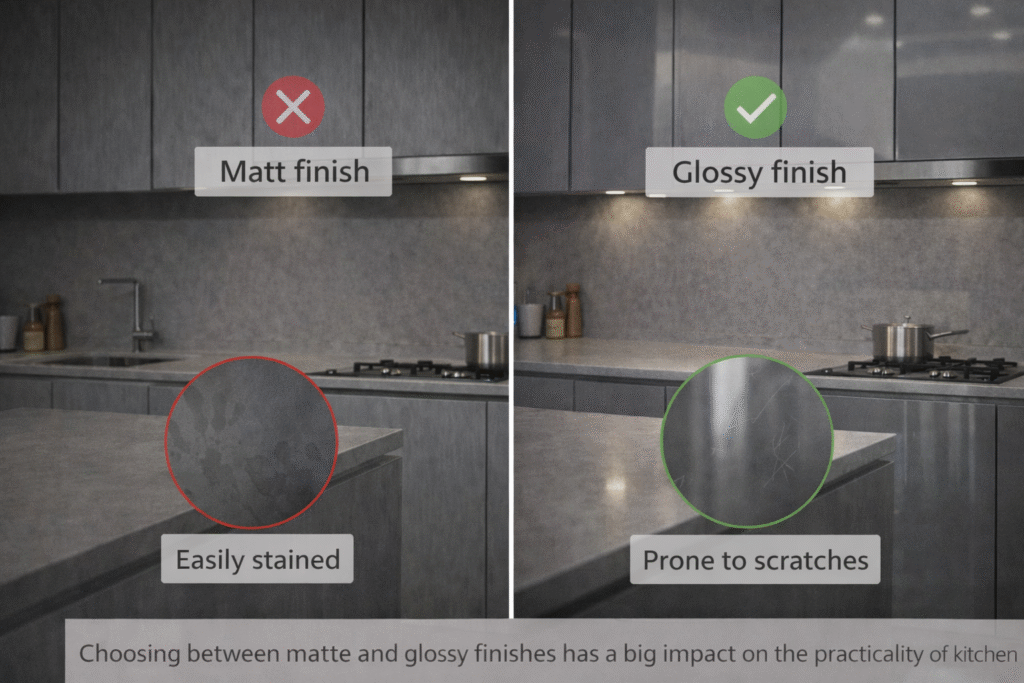
Choosing kitchen finishes based only on appearance can lead to long-term maintenance and durability issues.
The Mistake
Choosing glossy or matte finishes purely based on how they look in a showroom or catalogue without considering maintenance.
How to Avoid It
Choose finishes based on:
- Scratch resistance
- Ease of cleaning
- Fingerprint resistance
Best combination:
- Matte laminate for lower units
- Soft gloss / PU for upper units
Mistake #10: Poor Accessory Selection
The Mistake
Assuming expensive accessories equal better functionality.
Reality
A good layout matters more than accessories.
Smart Accessory Choices
- Cutlery trays
- Thali organisers
- Bottle pull-outs
- Tandem drawers
- Corner units only when necessary
Designer Tip from Rini:
Simple, well-planned modules often outperform complex hardware.
What is the average cost of a modular kitchen in Kerala?
Most well-built kitchens range between ₹1.5–₹3.5 lakh, depending on size, materials, and accessories.
Which material is best for modular kitchen cabinets?
Marine Ply (IS:710) with 0.7mm liner mica offers the best durability and moisture resistance.
Are tall units necessary?
Not mandatory, but they provide excellent storage for appliances and groceries.
How long does it take to complete a modular kitchen?
Typically 20–30 days, including design, factory work, and installation.
Conclusion
A modular kitchen becomes truly functional only when materials, layout, lighting, and workflow are planned together. These mistakes are extremely common — but also very easy to avoid when the design is thought through from the start.
At Turtle Vine Interiors, we help homeowners design kitchens that are efficient, durable, and customised to their lifestyle.
If you’re planning a new kitchen or a full home renovation, explore our interior design services in Trivandrum.